Automated Order Fulfillment: A Complete Guide for eCommerce Success
Automated order fulfillment is crucial for rapidly growing businesses to scale their business from 20 to 200+ packages. Learn how to overcome the manual process and embrace automation to scale your fulfillment.
Streamline picking, packing, and shipping to save time, reduce errors, and focus on business growth for small-to-medium eCommerce stores.
Automation handles labels, tracking, and courier selection, reclaiming hours weekly—perfect for ICPs juggling 100–2,500 monthly orders.
Compare real-time courier rates, access discounts, and reduce shipping spend by up to 35%, boosting profitability and customer satisfaction.
Fast, accurate shipping with automated tracking increases trust, reduces inquiries, and encourages repeat purchases for SMB eCommerce merchants.
Learn how to audit, select software, set rules, pilot, and optimize automation for maximum efficiency and measurable savings.
Running an eCommerce business is exciting, but it also comes with challenges. One of the biggest? Order fulfillment. When orders pile up, manually picking, packing, and shipping every product becomes overwhelming, expensive, and error-prone. That’s where automated order fulfillment comes in.
In this guide, we’ll break down what automated order fulfillment is, why it matters, how it works, and how you can use it to scale your business while saving time and money.
What Is Automated Order Fulfillment?
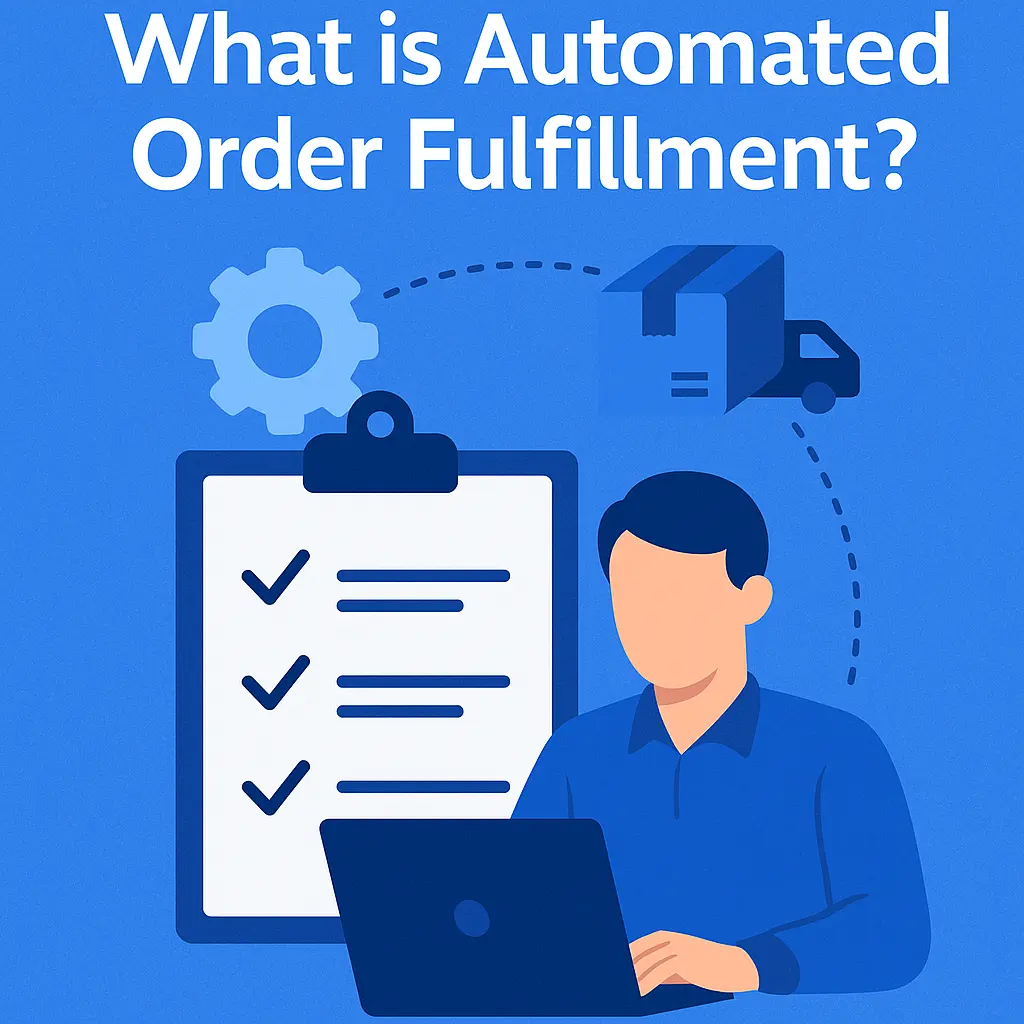
Automated order fulfillment is the process of using technology to handle the key steps of getting a customer’s order from checkout to delivery—without manual intervention.
This typically includes:
Order processing: Orders from platforms like Shopify, WooCommerce, or Amazon are automatically captured and synced to your fulfillment system.
Inventory management: Stock levels are updated in real time, preventing overselling.
Picking and packing: Robots, barcode scanners, or optimized workflows reduce errors when selecting and packing items.
Shipping and tracking: Shipping labels are generated automatically, and tracking numbers are shared with customers instantly.
For small-to-medium eCommerce businesses, this means fewer late nights packing boxes and more time growing sales. Think of it as hiring a virtual warehouse manager who never sleeps, never makes mistakes, and scales with your business.
What are the Main Features of Automated Order Fulfillment?
When choosing an automation solution, look for these must-have features. It’s like upgrading from a flip phone to a smartphone; suddenly, everything runs smoother, faster, and smarter.
Multi-Carrier Shipping
Compare rates across multiple couriers in real time to get the best price and fastest delivery. With multi-carrier shipping like Easyship, you can reduce shipping costs by up to 91% and cut delivery times by days. A small eCommerce business can use this feature to save on shipping while improving delivery speed, boosting customer satisfaction. It’s like having multiple taxi apps open—you always pick the fastest, cheapest ride without manual effort.
Automatically sync your stock across all sales channels to prevent overselling and stockouts. Businesses lose annual revenue due to inventory errors, but real-time inventory updates can eliminate most overselling issues.
Batch Label Printing
Print hundreds of shipping labels at once to save hours of manual work. High-volume stores can cut processing time by using batch label printing.
Custom Shipping Rules
Set automated rules to assign couriers based on weight, price, or destination as they can reduce shipping errors and speed up fulfillment . Imagine a cosmetics brand used custom rules to send lightweight items via USPS and larger packages via FedEx, saving hundreds of dollars every month. It’s like traffic lights on your own roads—everything flows without manual direction.
Returns Automation
Automate the return process with auto-generated labels and easy instructions. As per a report by Metapack, 92% of customers are more likely to shop again if returns are simple, and automated returns cut processing time. Think of it like a self-service kiosk at an airport—quick, easy, and customer-friendly.
Why Use Automated Order Fulfillment?
Automated order fulfillment isn’t just a nice-to-have—it’s a game-changer for eCommerce businesses looking to save time, cut costs, and improve customer satisfaction.
By letting technology handle repetitive tasks, store owners can focus on growth, marketing, and product innovation. Here’s why automation makes a real difference:
1. Save Time and Reduce Manual Work
Manual order fulfillment can eat up hours every week, especially for stores handling hundreds of orders. With automation, orders are routed directly to couriers, shipping labels are generated instantly, and tracking updates are sent to customers automatically.
How it works:
A customer places an order in your store.
The order automatically flows into your fulfillment platform.
Shipping labels are created in seconds.
Courier notifications and tracking links are sent to the customer automatically.
2. Lower Shipping Costs
Automation tools give you access to multi-carrier shipping software, letting you compare rates across couriers instantly. Instead of sticking with a single provider, every shipment can use the most cost-effective option.
How it works:
The customer places an order.
The system compares all connected couriers for price, speed, and reliability.
The most efficient option is selected automatically.
Labels are generated, and shipments go out at optimal cost.
3. Improve Customer Experience
Customers today expect fast, reliable delivery with real-time tracking. Automated fulfillment ensures accurate processing, quicker shipping, and seamless tracking notifications.
How it works:
Orders are automatically verified and routed to the optimal courier.
Customers receive tracking links and order confirmations instantly.
Real-time updates keep customers informed, improving satisfaction and loyalty.
Implementing automated order fulfillment doesn’t have to be overwhelming. By following a structured approach, eCommerce store owners can save time, reduce errors, and optimize shipping efficiency.
Step 1: Audit Your Current Fulfillment Process
Before you automate, understand how your current system works. Track how many hours you spend on manual tasks like printing labels, updating inventory, or entering orders into shipping systems.
Think of this step as mapping your route before a road trip—you need to know where the traffic jams are before finding faster highways.
Why it matters:
Identifying bottlenecks helps you focus on areas that will save the most time.
Pinpointing recurring errors ensures automation addresses your real pain points.
Step 2: Choose the Right Software or 3PL Partner
Not all fulfillment solutions are created equal. Look for providers that integrate seamlessly with your eCommerce platform and offer key features like multi-carrier shipping, international support, and automation rules.
It’s like picking the right toolbox—you want all the tools you’ll actually need, not a cabinet full of unused gadgets.
Why it matters:
A well-chosen platform ensures smooth adoption and reduces setup headaches.
Access to multiple couriers and automation features maximizes cost savings and efficiency.
Step 3: Set Up Automation Rules
Automation works best when guided by clear rules. For example, you can route orders under 1 lb through USPS First Class or automatically insure high-value packages.
It’s like programming a coffee machine—you tell it exactly how you want your coffee, and it produces the same perfect cup every time.
Why it matters:
Rules ensure consistency and reduce human error.
Automated decisions save time and prevent overspending.
Step 4: Test the System with a Pilot Run
Before rolling out automation fully, process 20–50 orders as a test run. Monitor for errors in label printing, tracking updates, or courier selection. Think of it as taking a test flight before your first long-haul journey—you want to ensure everything runs smoothly.
Why it matters:
Testing ensures the system works correctly and prevents large-scale mistakes.
Pilot runs help you tweak settings before going live.
Step 5: Scale and Optimize
Once testing is complete, roll out automation for all orders. Use dashboards to monitor delivery times, shipping costs, and error rates. Continuously adjust automation rules to improve efficiency and savings.
It’s like tuning a race car—you’ve got the basics right, but fine adjustments make it run faster and smoother.
Why it matters:
Optimization ensures your automation keeps delivering value as order volume grows.
Tracking performance helps identify new opportunities for cost reduction and faster delivery.
Automate Order Fulfillment with Easyship
Automated order fulfillment helps you scale your business without incurring heavy operational expenses.
By reducing manual work, cutting costs, and improving customer experience, automation frees you to focus on growth. Whether you’re a Shopify entrepreneur shipping handmade goods or a fast-scaling Amazon seller, the right fulfillment system can help you compete with the big players.
Easyship enables you to automate many shipping processes that otherwise eat into your operational hours. From batch printing multiple commercial invoices to setting up custom shipping rules to get a lead on delivery with minimal human intervention, Easyship catapults your business into an efficient and scalable business model.
If you’re ready to save time, lower costs, and ship smarter, now is the time to explore automated order fulfillment.
What is automated order fulfillment? Automated order fulfillment uses software to handle tasks like label printing, courier selection, inventory syncing, and tracking updates—saving time, reducing errors, and lowering costs.
What are the three types of order fulfillment?
In-house fulfillment – You manage storage, picking, packing, and shipping yourself.
Third-party logistics (3PL) – Outsource fulfillment to a provider.
Dropshipping – Supplier ships directly to customers on your behalf.
What is an example of automated order processing? A Shopify order is placed → system auto-selects cheapest courier → label prints instantly → customer receives tracking email, all without manual input.
Should I automatically fulfill orders on Shopify? Yes, if you sell digital goods or use 3PLs. For physical products, automation works best when paired with inventory sync, multi-carrier shipping, and clear rules.
TABLE OF CONTENTS
Key points
Key Points:
Streamline picking, packing, and shipping to save time, reduce errors, and focus on business growth for small-to-medium eCommerce stores.
Automation handles labels, tracking, and courier selection, reclaiming hours weekly—perfect for ICPs juggling 100–2,500 monthly orders.
Compare real-time courier rates, access discounts, and reduce shipping spend by up to 35%, boosting profitability and customer satisfaction.
Fast, accurate shipping with automated tracking increases trust, reduces inquiries, and encourages repeat purchases for SMB eCommerce merchants.
Learn how to audit, select software, set rules, pilot, and optimize automation for maximum efficiency and measurable savings.
Get Your Ship Together.
By submitting the form, you agree to receive marketing emails from Easyship.
Save up to 91% on Shipping. Try for free.
Effortlessly compare 550+ courier services with one global account. Instant discounts. Start in minutes.