If your online store ships to customers in the U.S., you’ve probably heard of the de minimis exemption. Starting August 29, 2025, a big change is coming that could affect how much it costs to ship your products and how quickly they arrive.
This blog breaks down what’s happening, why it matters, and what online sellers need to do now.
How will De Minimis Changes Impact eCommerce Prices?
The end of de minimis means many low-value products previously imported duty-free will now face full tariffs and taxes at the border, increasing the landed cost and ultimately retail prices.
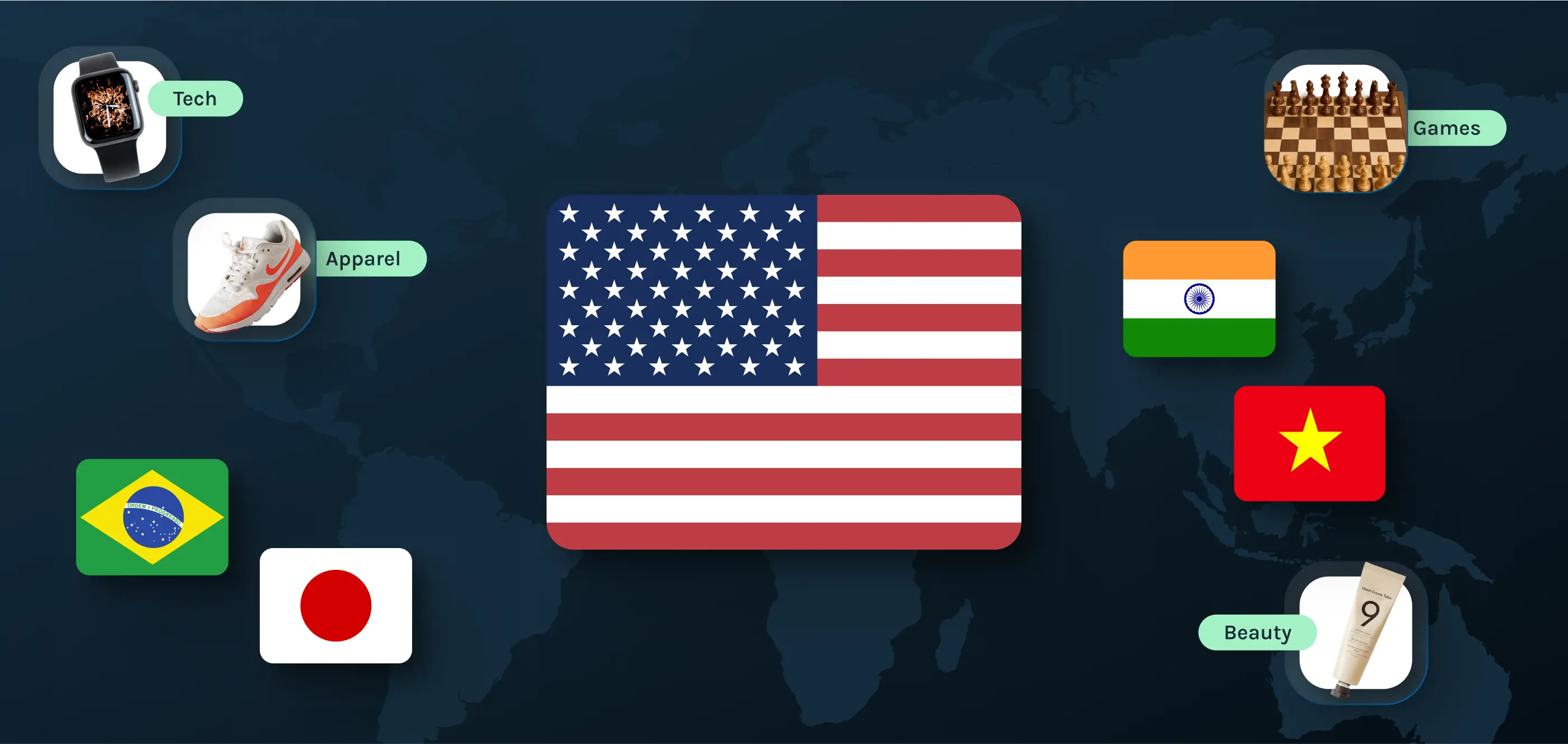
To show how this affects brands, here are examples across top eCommerce categories:
| Category |
Product |
Origin → U.S. |
Retail Price (Before) |
New Landed Price (Now) |
Tariff & Tax Applied |
Impact on Brand |
| Beauty |
Skincare Serum |
South Korea → U.S. |
$45 |
~$55.50 |
15% tariff + ~9% state tax |
Higher imported cost; may limit product range |
| Clothing |
Graphic Hoodie |
UK → U.S. |
$65 |
~$80.75 |
10% tariff + ~9% state tax |
Margin hit; sourcing or pricing adjustments necessary |
| Tech |
Wireless Earbuds |
China → U.S. |
$120 |
~$169.20 |
30% tariff + ~9% state tax |
Major cost increase; higher cart abandonment risk |
| Accessories |
Handbag |
Italy → U.S. |
$250 |
~$327.50 |
20% tariff + ~9% state tax |
Premium price point expands; consider bundling or localization |
| Footwear |
Running Shoes |
Vietnam → U.S. |
$95 |
~$138.46 |
34% tariff + ~9% state tax |
Steep cost pressure; brands may shift stock strategy |
| Games |
Card Game Set |
Germany → U.S. |
$30 |
~$39.42 |
20% tariff + ~9% state tax |
Low-priced products become non-viable without markup |
What Is the De Minimis Exemption?
The de minimis provision allows low-value imported goods (under $800) to enter the U.S. duty free, skipping the usual customs process. This applied to both postal shipments and commercial low value shipments.
The exemption helped small sellers avoid applicable duties and complex paperwork. It sped up shipping through the international postal network and made it easier to compete in the U.S. market.
But it also created a loophole. Many shippers worldwide used it to send below market products, counterfeit goods, or even illicit substances with less scrutiny. From 2015 to 2024, the number of parcels entering under this exemption increased over 600%, from 139 million to more than 1.36 billion annually. In 2023 alone, 4 million de minimis parcels crossed the border each day.
Why Is the U.S. Ending the De Minimis Exemption?
The U.S. government is suspending the de minimis privilege through an executive order. Officials say the rule has been used to evade law enforcement, bypass border protection, and funnel deadly synthetic opioids into the country.
Between 2015 and 2024, de minimis shipments rose from 134 million to over 1.36 billion. These low value articles entered the U.S. through the international postal system and other channels, often escaping customs checks.
US Customs Border Protection found that many shippers conceal product value, origin, and contents using false invoices, fraudulent postage, deceptive packaging, and re-shippers to hide true origins.
For many businesses, this means more costs and customs paperwork, making it more of a challenge to ship internationally. However, it’s possible to navigate these challenges by staying aware of all the trade rule changes and making changes in logistics processes to ease the customs process.
Key Dates You Need to Know
Here are the major dates you need to know to understand the timeline of events:
| Date |
Event |
| May 2, 2025 |
US ends de minimis exemption for imports from China and Hong Kong. |
| August 29, 2025 |
Global suspension of the de minimis exemption by the Trump Administration. |
| July 1, 2027 |
The One Big Beautiful Bill Act (OBBBA) permanently repeals the minimis exemption for all shipments. |
How This Affects Your eCommerce Business
For small sellers on Shopify, Amazon, or WooCommerce, the end of de minimis means higher costs and more customs paperwork—especially for low-value imports and dropshipping models.
Example: A seller in Vietnam shipping $20 phone cases may now face $80–$200 in duties per order under new IEEPA tariffs.
This could crush margins and slow delivery times.
US Fulfillment with Easyship
By shipping to US-based fulfillment, you can import in bulk, clear customs once, and ship domestically from a U.S. warehouse. Easyship’s US fulfillment network helps brands adapt to this new tariff environment by:
- Avoiding unpredictable tariffs on every shipment
- Delivering faster with shorter transit times
- Preserving margins with accurate, flat-rate domestic shipping
It’s a long-term strategy to stay competitive, compliant, and profitable in a post–de minimis world.
What Changes for Postal vs. Non-Postal Shipments?
For goods shipped through couriers like FedEx or UPS, all low value shipments must now pay applicable duties and use the right entry type.
For international postal shipments, there’s a six-month grace period. These shipments may use flat-rate tariffs based on the country of origin and their effective date of entry.
After that, such entry will require a full customs process with ad valorem calculations.
How Tariff Tiers Work for International Postal Shipments
For a limited six-month period after the effective date of August 29, international postal shipments can use simplified duty rates. These are based on the IEEPA tariff rate for the product’s country of origin.
| IEEPA Tariff Rate |
Flat Duty per Item |
| Less than 16% |
$80 |
| 16%–25% |
$160 |
| More than 25% |
$200 |
After this period ends, all postal shipments must follow standard ad valorem duty rules. Sellers will need to calculate duties as a percentage of item value and file customs documentation accordingly.
Which Countries are Affected by the Exemption?
The executive order initially targets China, Hong Kong, Mexico, and Canada. Each country was identified in separate national emergency declarations tied to illicit drug importation, border violations, and trade deficits.
The Trump administration states that the current suspensions are made on a global basis and each is enforced individually.
The de minimis suspension for China already affected several businesses, leading to several logistics changes. With the global suspension of this rule, the global trade dynamic could shift significantly.
New Compliance and Documentation Requirements
You must now file entries using the Automated Commercial Environment (ACE) and provide a proper country of origin declaration.
You also need to:
- Use an importer or party qualified to submit customs documentation
- Ensure carriers have valid international carrier bonds
- Use the appropriate entry type for informal entries below $2,500
- Remit duties and fees accurately
Here’s where a platform like Easyship comes in. Easyship makes it easier for you to manage your customs paperwork and your tax and duties calculation. You can save time and money by automating your international shipping process.
Penalties for Breaking the Rules
If you try to exploit the de minimis loophole, you risk large fines:
- $5,000 for the first offense
- $10,000 for each repeat offense
This includes attempts to evade tariffs, misdeclare values, or ship through deceptively exploitative practices.
How This Fits Into Bigger Trade Policy Changes
Since 2024, the Trump administration has issued multiple executive orders to restructure international commerce:
These policies aim to stop abuse of U.S. trade rules and reduce reliance on low value packages entering unchecked.
What Online Sellers Should Do Now
To stay compliant and competitive:
- Work with freight partners experienced in new customs rules
- Build duties into your product pricing
- Use checkout tools that calculate shipping fees and collect duties
- Train your team to handle entry filing and documentation
Easyship’s shipping automation software includes a tax and duties calculator and automated customs paperwork. You can check out the range of features to easily understand the tariff changes and stay profitable during this uncertain time.
Ready to simplify and save on shipping?
Easyship is here to help.
Easyship helps eCommerce sellers stay profitable in a changing trade environment. With reciprocal tariffs, customs duties, and new rules for cross-border orders, our free shipping tools and smart dashboard are built to help you ship smarter and sell globally—without the stress.
Frequently Asked Questions (FAQ)
Do the tariff changes affect all international shipments to the U.S.?
No. The suspension only applies to commercial low value imports that previously qualified under the de mi nimis exemption. Travelers and personal gift shipments still have limited duty-free allowances.
Can I still ship using USPS or postal services?
Yes, but only temporarily with simplified duty rates. After six months, even postal shipments must comply with full customs processing and ad valorem duty rules.
How can I calculate the new duties I’ll owe?
You can use tools provided by CBP or third-party logistics platforms to estimate applicable duties based on product value, category, and origin. These tools often integrate with the Automated Commercial Environment (ACE).
What’s the best way to stay compliant?
Use a customs broker or party qualified to handle such entry. Also, check that your carrier has proper international carrier bonds and confirm that your product values and country of origin are accurate.
Will this apply to dropshipping from China or other countries?
Yes. The suspension affects goods shipped through all channels, including dropshipping and cross-border fulfillment from Asia, Europe, or anywhere else.
Is the change permanent?
Yes. Although some temporary provisions are in place, the One Big Beautiful Bill Act (OBBBA) permanently ends the de minimis exemption globally on July 1, 2027.
How do I get started with a 3PL in the U.S.?
With Easyship, you can easily connect your store to a US-based warehouse. You choose a warehouse location, send inventory in bulk, and connect your store. Easyship handles storage, pick and pack services, domestic shipping, and displays live tax and duty calculations, so your business stays compliant and competitive in the U.S. market.